
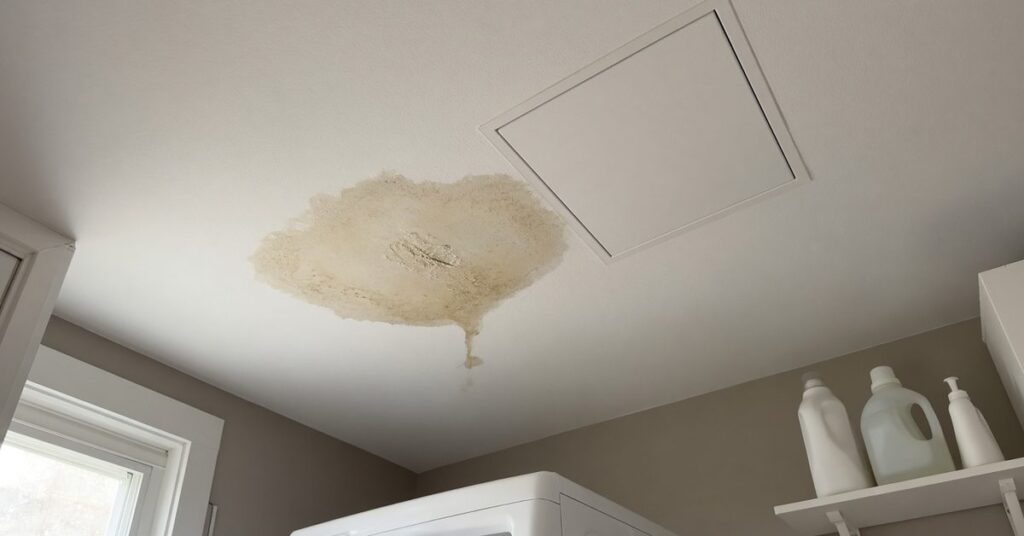
A lot of homes around San Antonio were built with the water heater up in the attic. Builders did it to save floor space in slab homes, and for years nobody gives it a second thought. Then one afternoon a brown ring shows up on the hallway ceiling, or water starts dripping out of a light fixture, and the tank that has been quietly doing its job for a decade becomes the most important thing in the house.
We have walked into a lot of these jobs. An attic leak caught early is usually very manageable. The trouble is that attic leaks are rarely caught early, because nobody goes up there. Here is what actually happens when that tank lets go, what to do in the first hour, and how to tell whether you are looking at a quick fix or a real restoration project.
Why Attic Water Heaters Fail the Way They Do
Most tank water heaters last somewhere between 8 and 12 years. In an attic, they live in the harshest spot in the house. On a July afternoon, attic temperatures here can climb well past 130 degrees. Add hard water leaving mineral scale in the bottom of the tank, and the lining wears out faster than most people expect.
When a tank fails, it usually happens in one of three ways. The first is a slow weep from a seam or fitting that drips for weeks before anyone notices. The second is the temperature and pressure relief valve opening and discharging water, which is often a sign of a bigger problem with the heater. The third is a full rupture, where the tank splits and dumps everything at once.
That last one is the worst, and here is why. A 50-gallon tank does not just release 50 gallons. As long as the cold water supply stays open, the heater keeps refilling and keeps leaking. We have seen a single failure put several hundred gallons into a ceiling before the homeowner got home from work.
The Drain Pan Is Not a Guarantee
Attic water heaters are supposed to sit in a drain pan piped to the outside or to a drain. It is a good safeguard, and it catches a lot of small leaks. But pans fail more often than people think. The drain line clogs with dust, debris, or wasp nests. The plastic cracks after years of attic heat. And a full rupture can simply overwhelm the pan and the line at the same time.
Once water gets past the pan, it has nowhere to go but down.
Where the Water Goes Next
The first thing it hits is insulation. Blown-in insulation soaks up water like a sponge and holds it right against the top of your ceiling drywall. Drywall is not built to carry that kind of weight. It softens, sags, and eventually gives way, sometimes all at once.
Water also travels. It runs along ceiling joists and pools in low spots, so the stain you see might be two rooms away from the heater. It finds its way into recessed lights, ceiling fans, and smoke detectors, which is a real electrical hazard. And it follows the framing down into the walls, soaking the drywall, the baseboards, and eventually the flooring. In a single-story slab home, an attic leak can end up wetting carpet pad, laminate, or wood floors on the ground level.
What to Do in the First Hour
- Shut off the water. The cold water supply valve is usually on top of the heater. If you cannot reach it safely, shut off the main water valve to the house.
- Cut the power or gas. Flip the breaker for an electric heater. For gas, turn the gas valve on the unit to off.
- Kill power to affected rooms. If water is near light fixtures or ceiling fans, turn off those breakers at the panel.
- Stay out from under sagging ceilings. Keep kids and pets out of the room and set a bucket or tarp down, but do not poke it or stand under it.
- Be careful in the attic. Only step on joists. Wet drywall will not hold your weight.
- Take photos and video. Capture the heater, the pan, the ceiling, and any damage below for your insurance adjuster.
Then call a restoration team. The sooner drying equipment is running, the more of your home can be saved rather than replaced.
What Restoration Actually Looks Like
A proper water damage job starts with finding every place the water went, not just the places you can see. We use moisture meters and thermal imaging to trace the water through the ceiling, into the walls, and down to the floor.
Soaked insulation almost always has to come out. Once it is wet, it compacts and loses most of its value, and leaving it in place keeps moisture pressed against the drywall. Ceiling sections that have sagged or softened get removed. Walls may need flood cuts at the bottom if water ran down inside them.
After that, it is a drying job. Air movers and dehumidifiers run continuously, and the moisture readings get checked every day until the materials are back to normal levels. Most attic leak jobs dry out in three to five days, depending on how long the water sat and how far it spread. You can see how we handle the full process on our water damage restoration services page. Once everything is dry, the residential reconstruction work begins: new insulation, new drywall, texture, paint, and any flooring that could not be saved, all handled by the same team that dried it out.
A Word on Insurance
Many homeowners policies cover sudden and accidental water damage, which is usually how a tank rupture is treated. The water heater itself typically is not covered, since it failed from age and wear. Slow leaks that went on for weeks are where claims get harder, because the insurer may call it a maintenance issue. Good photos and a clear moisture map from your restoration contractor make a real difference in how that conversation goes.
Keeping It From Happening Again
When the heater gets replaced, it is worth asking whether it needs to stay in the attic at all. Some homeowners move to a tankless unit or relocate the heater to the garage. If it stays up there, a few inexpensive upgrades help a lot: a leak sensor with an automatic shutoff valve, a yearly check that the pan drain line is clear, and an annual flush to cut down on sediment.
We’re Close By
Attic water heater leaks are some of the most common calls we get, from older homes around San Antonio to newer builds in Stone Oak and out through the Hill Country to Boerne. If you have water coming through a ceiling right now, call us at (210) 774 6486. Our team answers 24/7 and can get drying equipment in place fast.