Garages are one of the most common places for a house fire to start. It makes sense when you think about what is out there: gas cans for the mower, paint thinner, a spare freezer running on an old outlet, a battery charger, a workbench full of power tools, and often a water heater with a pilot light. In a lot of San Antonio homes, the garage also shares a wall and a ceiling with the kitchen, a bedroom, or the laundry room.
When a garage fire happens, the damage rarely stays in the garage. Here is what homeowners should know about what happens next, how the house gets restored, and how to make smart decisions during the rebuild.
Why Garage Fires Spread Into the House
Most attached garages are built with a fire-rated drywall separation between the garage and the living space, and the door into the house is supposed to be a solid or fire-rated door. That separation buys time. It is not meant to stop a fire indefinitely.
Over the years, many homes lose some of that protection without anyone noticing. Someone cuts an opening in the garage ceiling for attic storage and never installs a proper hatch. The door to the house gets swapped for a hollow-core door. Pipes and wiring get run through the shared wall with gaps left open around them. Each of those becomes a path for fire, heat, and smoke.
Even when the separation holds, smoke almost always gets into the house through the attic, the door gap, or the HVAC system, especially if the air handler or a return vent sits in or near the garage.
The First Days After the Fire
- Get the structure checked. Garage ceilings often carry attic loads. Fire can weaken trusses and joists even when they do not look badly burned.
- Secure the opening. A damaged garage door or burned-through wall leaves the house exposed. Board-up and tarping keep weather and intruders out.
- Keep the HVAC off. Running it spreads soot through the whole house.
- Stay away from damaged electrical. The garage panel, outlets, and any wiring that ran through the fire area need inspection before anything is turned back on.
- Document before anything gets thrown out. Photos of the garage, vehicles, tools, and stored items all support your insurance claim.
What Garage Fire Restoration Involves
A proper fire damage restoration project on a garage fire usually covers three zones.
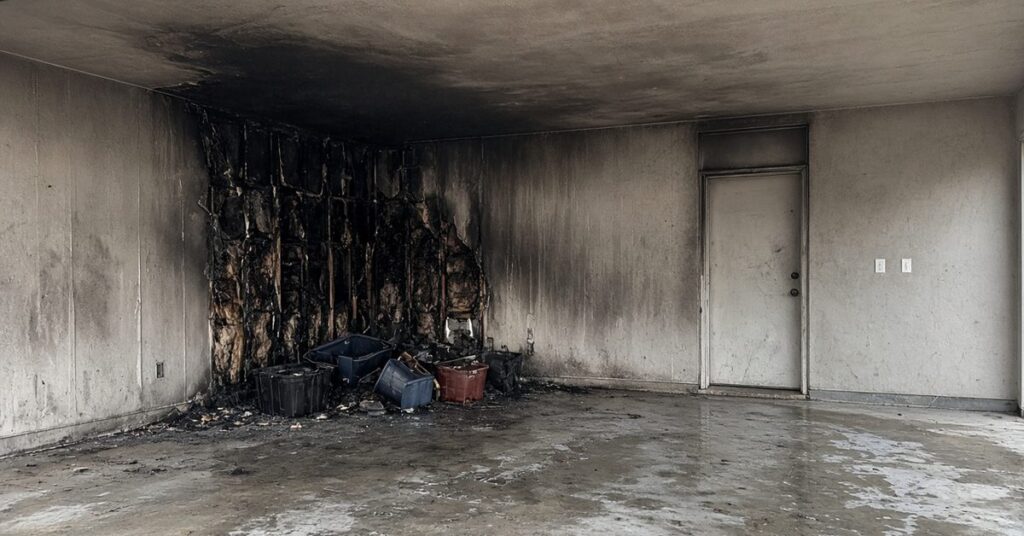
The garage itself is typically the heaviest demolition. Burned drywall, insulation, the garage door and opener, shelving, and sometimes framing come out. Concrete floors usually survive, though they may need cleaning and sealing to deal with staining and odor.
The attic above is next. Smoke and heat collect there, so insulation is often replaced, and framing is cleaned or sealed with an odor-blocking primer. Trusses get checked for charring and structural damage.
The house is the third zone. Rooms that share a wall with the garage often need drywall replacement on that wall. The rest of the home gets smoke and soot cleaning, odor removal, and duct cleaning so the smell does not keep coming back.
Water from firefighting is part of the picture too. It soaks into drywall, baseboards, and flooring near the garage, and it has to be dried properly before rebuilding starts.
Rebuilding the Garage Better Than Before
Once the garage is stripped down to framing, there is a real opportunity. Everything has to be rebuilt anyway, so it is the ideal time to fix the things that never worked well.
Common upgrades we talk through with homeowners include a proper fire-rated separation wall and self-closing door to the house, dedicated circuits for freezers and workshop tools, better lighting, epoxy floor coatings, built-in storage and cabinets, and insulated garage doors that help with Texas summer heat. Some families take the chance to convert part of the space into a mudroom, laundry area, or home gym.
Insurance generally covers restoring what you had. If you want to go beyond that, you pay the difference, but you are not paying twice for demolition and framing that already has to happen. Because we offer remodeling services in-house, the upgrade work fits into the same schedule and the same crew as the restoration.
Choosing the Right Team
Look for a contractor who handles both the fire cleanup and the reconstruction, understands how garage separations are supposed to be built, and works directly with your insurance adjuster. Splitting the job between a cleanup company and a separate builder often adds weeks and leaves room for gaps in the scope. One team means one schedule, one point of contact, and one company accountable for the finished result.
Frequently Asked Questions
How long does garage fire restoration take?
Cleanup, odor removal, and drying usually take one to two weeks. The rebuild depends on what burned. If framing, the garage door, and electrical all need replacing, plan on several weeks to a few months, since permits, inspections, and insurance approvals all affect the schedule. We give you a realistic timeline after the first inspection.
Can I use the garage after a fire?
Not until the structure and wiring have been checked. Fire can weaken trusses and joists even when they look fine from below, and damaged wiring is a serious risk. Keep vehicles and people out until an inspection clears the space.
Does homeowners insurance cover a garage fire?
Most policies cover sudden, accidental fire in an attached garage, along with smoke damage to the house, subject to your deductible and limits. Detached garages usually fall under a separate other structures limit. Upgrades beyond what you had before are typically paid out of pocket.
Will smoke from a garage fire damage my car?
It can. Soot is acidic and can etch paint, and smoke gets into the cabin and air filters. Let your auto insurer know and have the vehicle professionally cleaned rather than running it through a regular car wash.
Serving San Antonio and Beyond
We handle garage fire restoration and rebuilds from Seguin to Alamo Heights and throughout greater San Antonio. If you are dealing with fire damage, call us 24/7 at (210) 774 6486 and we will walk you through what comes next.