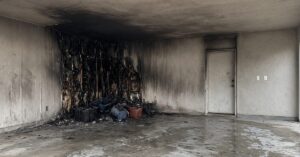
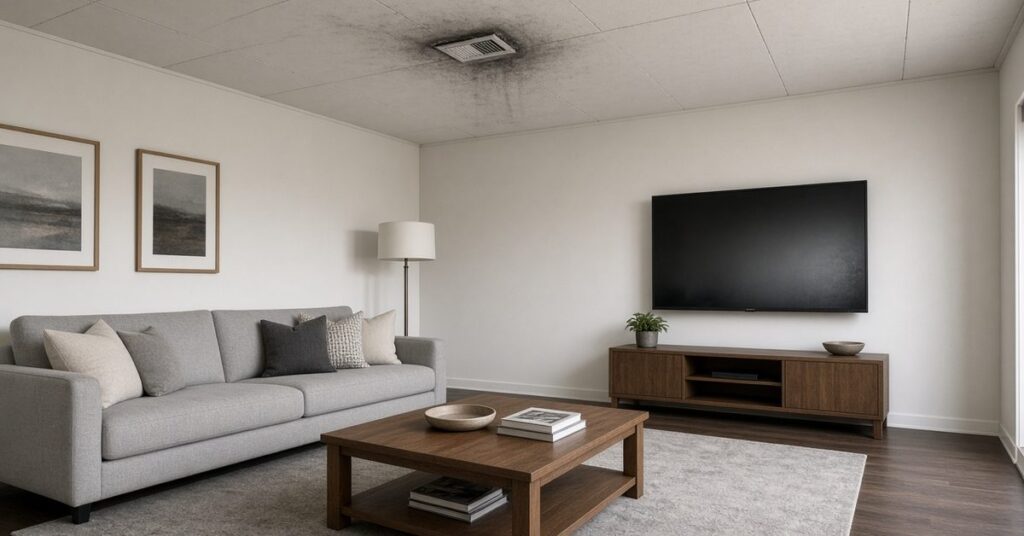
A small fire in one room rarely stays a small problem. We hear it all the time from homeowners around San Antonio. The fire started in the laundry room or a back bedroom, the fire department had it out in minutes, and the damage looked contained. Then a week later the closet at the other end of the house still smells like a campfire, and the white ceiling in the living room has turned a faint gray.
That is smoke damage, and it travels a lot farther than flames do. Here is why it spreads, where it hides, and what it takes to actually get rid of it.
How Smoke Moves Through a House
Hot smoke rises and pushes outward, looking for cooler air and any path it can find. It follows hallways, slips under doors, and rides the air currents already moving through the home. If the HVAC system was running when the fire started, the return vents pulled smoke straight into the ductwork and pushed it back out into every room on that system.
Smoke also works its way into places people never think to check. It gets inside kitchen cabinets and dresser drawers, behind outlet covers, into the attic through ceiling penetrations, and deep into carpet, upholstery, mattresses, and clothing.
The particles are extremely small, so they settle into porous materials like drywall, unfinished wood, fabric, and insulation. Once they are in, surface wiping will not pull them back out.
Why the Smell Keeps Coming Back
One of the most frustrating parts of smoke damage is the odor that seems to disappear and then return. Homeowners air the house out, run fans, maybe spray an air freshener, and it smells better for a day or two. Then a warm, humid afternoon hits, which in South Texas is most afternoons, and the smell is right back.
That happens because heat and humidity open up porous materials and release the smoke particles trapped inside them. Air fresheners and household deodorizers only mask the odor. Until the residue is physically removed or sealed, the smell will keep cycling.
Signs of Smoke Damage Far From the Fire
When we walk a home after a fire, we start in the rooms farthest from where it began and look for these signs:
- A gray or yellow tint on ceilings, especially at the corners and around vents
- Dark outlines around smoke detectors, light fixtures, and air registers
- Discolored grout, tarnished faucets, or dull metal hardware
- A film on windows and mirrors that smears instead of wiping clean
- Odor inside closed closets, cabinets, and drawers
- Dark strands in ceiling corners, which form when soot clings to existing dust
If you see any of these in a room the fire never reached, the smoke got there.
What Not to Do
The instinct to start cleaning right away is understandable, but a few common moves make smoke damage worse. Don’t run the HVAC until the ducts are checked and cleaned, because turning it back on redistributes soot through the whole house. Don’t scrub walls with water or all-purpose cleaners, since wet cleaning drives soot into paint and drywall and can leave permanent staining. Don’t wash smoke-damaged clothing with regular detergent before talking to a restoration team, because some fabrics need specialized treatment. And don’t paint over it. Regular paint will not hold back smoke odor, and the smell will bleed right through.
How Professional Smoke Damage Restoration Works
Real fire damage restoration treats the whole house, not just the burned room. It usually runs in a clear order.
First, we map how far the smoke went, room by room, including the attic, ductwork, and inside cabinets. Contents that can be cleaned are moved out or protected, and items that cannot be saved are documented for your insurance claim.
Surface cleaning comes next. Dry soot sponges lift loose residue from walls and ceilings without smearing it. After that, surfaces are cleaned with products matched to the type of residue, because smoke from burning plastic, wood, and food each leave different residues that respond to different cleaners.
Odor removal is its own phase. HEPA air scrubbers pull fine particles out of the air, and thermal fogging or hydroxyl generators break down odor molecules that have worked into porous materials. Framing and drywall that held heavy smoke are often sealed with an odor-blocking primer before any finish paint goes on. Ductwork gets cleaned so the system does not keep circulating residue.
When Cleaning Turns Into Remodeling
Sometimes cleaning is not enough. Heavily affected drywall, insulation, and cabinets often cost more to clean than to replace, and some materials simply will not give up the odor. When that happens, the project shifts into rebuilding, and that is a natural point to ask whether you want the space put back the same way or improved.
A lot of homeowners use that moment to update flooring, repaint in a new palette, or rework a closet that never worked well. Since we provide remodeling services alongside restoration, one team carries the project from soot cleanup through final finishes, with no handoff between contractors and no gap in accountability.
Help Across the Area
We clean up smoke damage in homes of every age, from newer builds in Schertz to established neighborhoods in Cibolo and across greater San Antonio. If your house still smells like smoke after a fire, call us at (210) 774 6486. We will walk every room with you and tell you honestly what can be cleaned and what needs to be replaced.