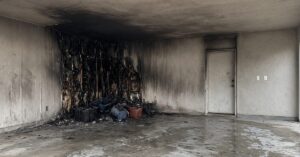
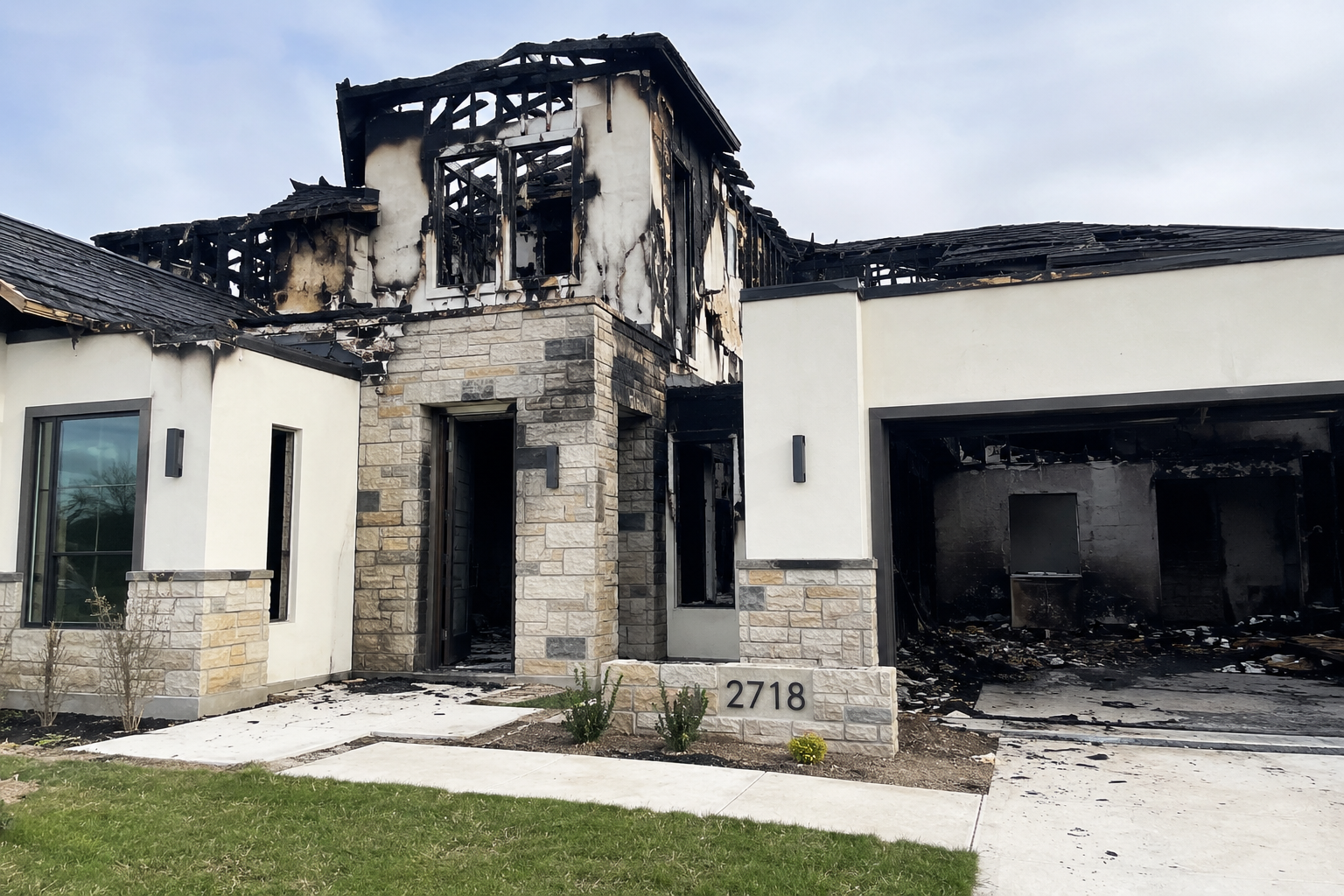
Fire damage restoration involves six sequential phases: emergency securing of the structure, structural safety assessment, full damage documentation for the insurance claim, smoke and soot remediation throughout the home, water damage mitigation from fire suppression efforts, and reconstruction of everything that was damaged or removed. The process is more involved than most homeowners expect because fire damage affects the structure, the air quality, the contents, and the systems of the home simultaneously and in ways that compound each other.
Here is what each phase involves and what drives the timeline through a complete fire restoration.
Phase One: Emergency Securing
The first priority after the fire department clears the scene is securing the structure against weather and unauthorized entry. Board-up of damaged windows and doors and tarping of any compromised roof sections stops additional damage from entering before the assessment and insurance process begin. This phase happens on the day of the call and is covered under most homeowner policies as an emergency mitigation expense.
Properties left unsecured after a fire sustain weather damage, theft of salvageable materials, and in some cases additional fire risk from smoldering materials that re-ignite when exposed to fresh oxygen through an unsecured opening. Emergency securing is a required first step, not an optional service.
Dwyer Restoration provides same-day emergency securing for fire damage events across Boerne and the Hill Country service area. The securing documentation is part of the insurance claim file from the start, not assembled retroactively.
Phase Two: Structural Safety Assessment
Before anyone enters the fire-damaged structure for restoration purposes, a structural safety assessment determines which areas are safe to access. Heat affects structural connections, framing, and masonry in ways that are not visible from inside the home. A floor that looks intact can have compromised substructure. A ceiling that appears sound can drop without warning. Electrical systems exposed to fire and suppression water create shock hazards.
This assessment is not the same as the fire department’s scene clearance. Scene clearance establishes that active fire suppression is complete. Structural safety clearance establishes that the building is safe to enter for restoration work. Both are required before work begins.
Phase Three: Damage Documentation
Before any cleanup begins, the full scope of the damage is documented through photographs, video, and written assessment. This documentation covers the structural damage from the fire, the smoke travel footprint throughout the home, the extent of water damage from suppression, and the condition of all contents. The documentation produced in this phase is the foundation of the insurance claim.
For property owners in Alamo Heights going through a fire loss, this documentation phase is what the entire claim rests on. Content that is not documented before cleanup begins cannot be claimed. Damage that is not photographed before repairs alter the condition cannot be established for coverage purposes. The restoration company’s documentation, combined with the homeowner’s own photos, creates the complete evidentiary record.
Phase Four: Smoke and Soot Remediation
Smoke and soot remediation covers every surface in the smoke travel footprint using the correct dry-before-wet cleaning sequence, HVAC system cleaning including ductwork and air handler, contents assessment and pack-out, and odor elimination using thermal fogging or hydroxyl treatment. This phase is the most labor-intensive component of fire restoration and the one most often done incompletely.
The scope of smoke remediation extends throughout the home, not just in the fire origin area. Rooms connected to the HVAC system, rooms with gaps at door frames, and any space connected to the wall cavity network are all potential smoke damage areas that require assessment and treatment.
Dwyer Restoration’s fire and smoke restoration teams serving Bulverde and Canyon Lake map smoke travel as a first step in the remediation phase, building the cleaning scope from the evidence rather than limiting it to the most visibly affected areas.
Phase Five: Water Damage Mitigation
Fire suppression efforts introduce significant water into the structure. Sprinkler systems, fire hose water, and water used by firefighters to protect adjacent structures all create water damage that must be addressed alongside the fire and smoke damage. This water is typically category two or three contamination because it has been in contact with fire debris, burned materials, and the combustion products present in a fire-affected structure.
The water damage from suppression is a covered component of the fire loss under most homeowner policies. It is treated as part of the fire claim, not as a separate water damage claim. Documenting the suppression water separately from the fire damage is important for adjusters who review each component of a fire loss independently.
Phase Six: Reconstruction
Reconstruction follows smoke remediation and water damage drying clearance. New drywall, insulation, flooring, trim, cabinetry, and paint replace what was removed. Structural repairs address framing and connections that were compromised by the fire. Mechanical systems including electrical, plumbing, and HVAC are inspected and certified before they are re-enclosed. Permits are required for the structural and systems work in most jurisdictions.
Dwyer Restoration handles reconstruction as part of the integrated fire restoration scope for property owners across Camp Bullis and the full service area. The reconstruction estimate is built from the documentation generated during the damage assessment phase, producing a consistent scope that matches what the adjuster reviewed rather than introducing new items at the reconstruction stage.
Frequently Asked Questions
Q: What does fire damage restoration involve?
A: Fire damage restoration involves six sequential phases: emergency securing of the structure, structural safety assessment, full damage documentation for the insurance claim, smoke and soot remediation throughout the smoke travel footprint, water damage mitigation from suppression efforts, and reconstruction of everything damaged or removed. Each phase must be completed in sequence before the next begins, and the documentation from each phase supports the insurance claim and the phases that follow.
Q: How long does fire damage restoration take?
A: Emergency securing happens on day one. Structural assessment and documentation take days one and two. Smoke remediation typically runs one to two weeks depending on the extent of smoke travel throughout the home. Water damage drying adds three to five days running concurrently with smoke remediation where possible. Reconstruction depends on the structural scope and permit timeline, ranging from several weeks to several months for significant losses. Total timeline from fire event to completed reconstruction is typically one to three months for residential losses.
Q: What happens to the contents of a home after a fire?
A: Contents are inventoried before any are discarded, with each item categorized as salvageable or a total loss based on a professional cleaning trial. Salvageable items are packed out to a climate-controlled facility where they are cleaned using ultrasonic equipment, ozone treatment, or material-specific methods and stored while the structure is restored. Contents classified as total losses are documented for insurance replacement. The contents inventory feeds directly into the insurance claim and recovers items that visual inspection alone would categorize as total losses.
Q: Does insurance cover all fire damage restoration costs?
A: Standard homeowner policies cover fire damage restoration costs minus the deductible for covered fire events. Coverage includes structural damage, smoke and soot remediation, water damage from suppression, contents restoration or replacement, and additional living expenses if the home is uninhabitable during restoration. The deductible applies to the total covered loss. Homeowners with replacement cost coverage receive the full cost of restoration. Those with actual cash value coverage receive depreciated settlement on certain components.
Fire damage to your home in the San Antonio area? Dwyer Restoration handles every phase from emergency securing through final reconstruction across Boerne, Bulverde, Canyon Lake, Alamo Heights, and Camp Bullis. Call now.